Episodes
The nightmare scenario has long been the same: China makes a move on Taiwan, the U.S. gets pulled into a war in the Pacific, and the world watches two superpowers collide thousands of miles from American soil.
Gordon Chang thinks that may be the wrong way to look at it.
In this interview, he argues that if war comes, China could try to hit the United States first — inside the country using vulnerabilities America already has. And Chang thinks this could happen soon with Xi Jinping’s “window of opportunity” fast closing.
In Part 1 of a two-parter, Chad sits down with Chang to unpack what China;s master plan, what could trigger a first attack, and what a potential U.S.-China war may look like.
Before Brazilian jiu-jitsu became a global sport, Vinicius “Draculino” Magalhães was a kid surfing alongside the Gracies in Brazil. The people he grew up around would help shape martial arts history — and he would become part of that story himself. He went from watching his idols to facing them in competitions.
The U.S. grid gets taken down by an enemy and the entire country goes dark. No phones. No ATMs. No gas pumps. No grocery deliveries. No running water. What now?
That question drives Part 2 of our conversation with Jonathan Hollerman. Part 1 exposed how easily the grid could be attacked. Now Jon walks Chad through what he would actually do to survive it.
Most Americans assume the electrical grid is protected — and that if it ever failed, the military or federal government would step in. Jonathan Hollerman once wrongly assumed the same thing.
That changed after he participated in a nationwide grid-down war game at Maxwell Air Force Base alongside federal agencies, military branches and utility experts. Jonathan walked away convinced that the safety net Americans expect simply isn’t there. And worse, any attack on the grid would be absolutely catastrophic to the American people.
Rich Graham was isolated in the California desert during the third phase of Navy SEAL training when an instructor announced that a plane had hit the World Trade Center. After all the mind games they had already endured during hell week, the class assumed it was another prank. Then the second tower was hit, and the instructors told them, “boys, we’re going to war.” Rich recalls the surreal morning of 9/11 and how the energy, intensity, and purpose of their training changed instantly.
This one is personal for Chad. He sits down with his longtime professor, Carlson Gracie Jr., for a conversation about the family and the art that have shaped the world of fighting. Carlson shares stories about his grandfather Carlos Gracie, his father Carlson Gracie Sr., the early days of Vale Tudo and the UFC, and what it was like growing up inside one of the most influential families in martial arts.
War is changing faster than most people realize, and Dave Cosnotti has seen it firsthand. After more than two decades in Army Special Forces, Dave now works alongside American and allied forces on modern national security challenges involving drones, AI, cyber warfare, critical infrastructure, and the rapidly evolving battlefield.
Dave’s biggest warning isn’t that America has already lost its edge — it’s that being on top today guarantees nothing about tomorrow. Warfare is evolving too quickly for old advantages to last forever, and the next world order may belong to whoever learns, adapts, and moves fastest when the rules change.
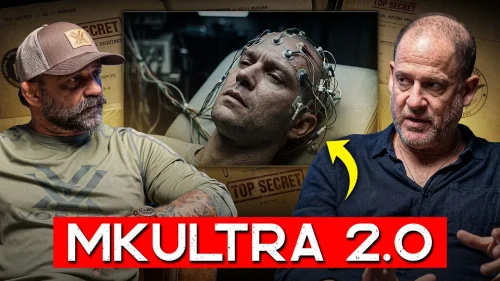
MKUltra is supposed to be a dark chapter of American history that closed decades ago. James Martinez doesn’t believe it ever really ended. He argues the experiments simply evolved — from drugs, hypnosis, and behavioral conditioning into technologies capable of collecting brain data, influencing behavior, and potentially reaching directly into the human mind.
James has unique views, built upon decades of studying MKUltra. What follows is a conversation shaped by that worldview — skeptical of official narratives, deeply suspicious of where technology is taking us, and willing to go places most people wouldn’t even consider.
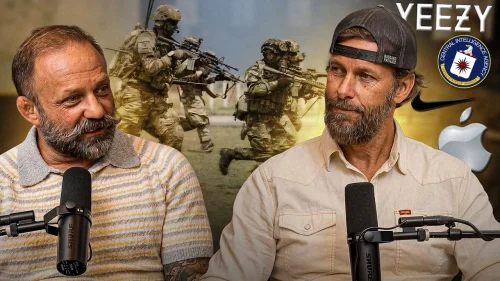
In this episode of The Resilient Show, Chad sits down with Justin to unpack what he’s learned from working around elite performers, operators, executives, innovators, and fighters. They talk about why the best aren’t afraid to fail, how high-performing teams attack hard problems, why execution matters more than having all the answers, and what happens when driven people realize they can’t control every outcome.
Key Topics:
– What Justin learned working with Delta Force/CAG, Nike, Apple, DARPA, and the CIA
– The problem-solving principle: “Solving the wrong problem well still fails”
– How failure builds resilience and exposes the next level you need to reach
– Why execution separates people who know what to do from people who actually get results
– The importance of identifying the real problem instead of treating symptoms
– How martial arts shaped Chad and Justin’s views on discipline, suffering, and performance
– What he learned sitting inside high-pressure rooms with figures like Kanye West
– Why fear and the need for control can affect even the most capable people
– How faith and surrender changed Justin’s understanding of resilience
The environments may look completely different, but Justin keeps seeing the same principles